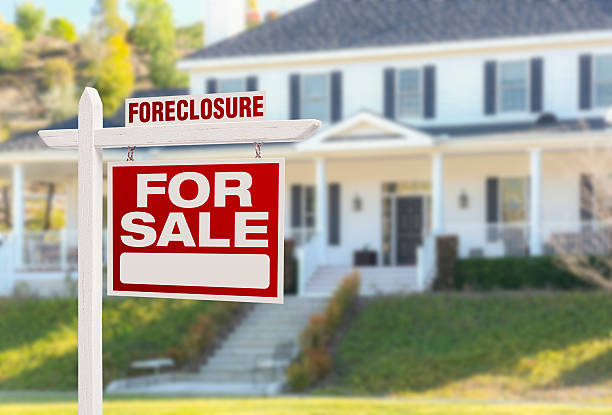
Bankruptcy Does Not Stop LLC Foreclosure

Filing for bankruptcy protection will not stop a foreclosure on property held by an LLC, even if it’s administratively dissolved. That was the Bankruptcy Court’s ruling in a recent Chapter 7 Bankruptcy case, In re Kimball. In this case, the 100% owner of an LLC let the Georgia Secretary of State’s Office administratively dissolve his LLC, presumably for not filing annual registration. Prior to a foreclosure on real estate held in the name of the LLC, the owner of the LLC filed for bankruptcy. He argued that because he is the 100% owner and because the LLC is administratively dissolved, the real estate is part of his property and protected from foreclosure by his bankruptcy. The court disagreed and walked though how Georgia LLC law does not provide him a sufficient property interest in a dissolved, but not terminated, LLC’s assets. Therefore, the foreclosure was not cancelled and the real estate is lost.

If you own an LLC and are considering bankruptcy, be careful to remember that the LLC is a separately legal entity, even if it has been administratively dissolved.

Bankruptcy Filings Rise 11.5%

According to data collection by the federal government, personal and business bankruptcy filings rose 11.5 percent in the twelve-month period ending June 30, 2025, compared with the previous year. Furthermore, even upper income Americans are starting to default on credit card debt and car loans in alarming numbers.

A number of problems contributed to this trend. Interest rates remain high, tariffs cause inflation, and personal incomes are unable to keep up. As more and more families turn towards credit cards and personal loans to bridge the gap, this budget shortfall eventually becomes an insurmountable obligation that can lead to bankruptcy.

If you are suffering from large credit card debts, personal loans, overdue car payments, or mortgage concerns, we can help. Both Chapter 7 and Chapter 13 can eliminate debt and solve financial problems. Schedule a free and confidential consultation with one of our experienced attorneys to see what options may be available.

Keep Your 401k in Bankruptcy

Be careful withdrawing money from a retirement account to pay down debt. You can keep your 401k in bankruptcy.

CNN reports that 401k hardship withdrawals have spiked this year going up 36%. Many people turn to retirement accounts as a source of money to pay towards credit card debt, loans, and other financial problems. You should carefully consider your options before doing this however because there are serious risks of dipping into a 401k account. You may face tax penalties and lost future gains on your investment. More importantly, money in most retirement plans is untouchable by creditors and the funds are exempt from the bankruptcy process.

You should speak with an experienced attorney or financial adviser before taking a hardship withdrawal from a 401k help deal with debt you are struggling to pay. It may be better to consider filing for either Chapter 7 or Chapter 13 bankruptcy relief because you can generally keep all the money in your retirement account. It is painful to see bankruptcy clients who have slowly drained their life savings to pay towards debts when they could have simply filed bankruptcy earlier and kept their retirement accounts intact.

11th Circuit Narrows Espinosa

11th Circuit narrowly interprets Espinosa in Chapter 13 Bankruptcy

In a recent opinion, the 11th Circuit Court of Appeals made a narrow interpretation of the Supreme Court’s Espinosa decision. The Supreme Court ruled in Espinosa that a chapter 13 plan, which had been approved and completed years ago, was binding upon a student loan creditor even if the order might have originally been erroneous. The reasoning was that under Federal Rule 60(b)(4), a petitioner can set aside a judgment if it is void. The student loan creditor claimed that the prior bankruptcy orders were void because they were erroneous. The Supreme Court denied this and stated that Rule 60(b)(4) can’t be a substitute for a timely appeal. In other words, the student lender sat on their rights.

In the recent Bozeman decision, the 11th Circuit said Espinosa did not apply because this was not a request to set aside a judgment as void under Rule 60(b)(4). Instead, the chapter 13 bankruptcy case was active and nearing the completion. The dispute was whether the original plan confirmation order required the bankruptcy court to discharge the remaining mortgage loan balance in violation of 11 U.S.C. § 1322(b)(2). The 11th Circuit ruled that the anti-modification provision of § 1322(b)(2) prevail and therefore the bankruptcy court could not discharge the remaining mortgage loan balance.

Update to Discharging Student Loans in Bankruptcy

Justice Department announced plans for a fairer and more streamlined process to discharge education loans in bankruptcy

Last week the Justice Department announced a new process for individuals seeking to discharge their student loans in bankruptcy cases. As part of the undue hardship analysis, courts review the borrower’s past, present and future financial circumstances. The new process will leverage Department of Education data and a new borrower-completed attestation form to assist the government in assessing a borrower’s discharge request. The Justice Department, in consultation with the Department of Education, will review the information provided, apply the factors that courts consider relevant to the undue-hardship inquiry and determine whether to recommend that the bankruptcy judge discharge the borrower’s student loan debt.

It will likely still be very difficult to successfully discharge student loans as part of a bankruptcy case. Even so, efforts like these are promising and indicate that the government may be more compassionate in deciding not to oppose a bankruptcy debtor from discharging student loans in certain situations. If you do not have the ability to pay your student loans, are unlikely to be able to pay in the future, and you have made honest attempts to pay your student loans, you should call our office at 706-226-5425 to discuss the potential for discharging your student loans through bankruptcy.

Beware of Debt Settlement Programs

Debt settlement companies make big promises they often don’t keep

As a debt relief agency and bankruptcy law firm, we often encounter clients who have previously tried settlement programs. While some programs are legitimate, the industry is filled with predatory practices and some outright scams. The initial pitch is very enticing – the debt settlement companies promise to save you thousands of dollars by utilizing their “special” skills to negotiate lower settlements.

These big promises are rarely kept and even the FTC warns about scams. It appears to work at first because after a client signs up and gives up account access, the debt settlement company gets contact information changed. This means the person may stop receiving phone calls and billing statements and mistakenly believe that the program is working. Meanwhile, their account is being auto-drafted for hundreds of dollars each month for the program. Months down the line, a lawsuit or garnishment is filed and the borrower contacts their debt settlement program about what went wrong. Only then do they realize that most of their monthly payment went towards fees of the debt settlement company and not towards negotiated payoffs. The person then cancels the program and may end up filing for bankruptcy anyway.

Before you sign up with a debt settlement company, you should insist on having a personal consultation with a licensed attorney. The representatives who contact you are often non-attorneys and will try to avoid this, which should be a big red flag. Make sure they detail exactly how much you will pay for fees and costs of the program. It is also smart to research and check for reviews or complaints online against the company.

Student Loans Ruled Nonconsumer Debt

Featured

Debtor with majority student loan debt exempt from bankruptcy income test

A recent Georgia Bankruptcy Court ruling provides help for people suffering from burdensome student loan debt. Generally, debtors who file for a traditional chapter 7 bankruptcy are subject to income testing, or “means testing,” to determine if it is fair for them to discharge their debt according to their income level or if instead they should pay some debt back in a chapter 13 bankruptcy case. Chapter 7 income testing only applies to bankruptcy filers whose debts are majority “consumer” debts, as opposed to business debts. The Federal Bankruptcy Judge in In Re Ruff, decided that because the bankruptcy filer took out the student loans to further her career as a profit motive, it was not a consumer debt, but more similar to a business debt. Therefore, her debt was over 50% non-consumer debt and she was not subject to income testing for chapter 7 bankruptcy. While student loans are generally non-dischargeable in bankruptcy, this court decision means that bankruptcy relief more accessible to people who may have a good income, but are still struggling with student loans on top of other debts.

If are struggling with hefty student loans in Georgia, bankruptcy could help eliminate your other debts and provide you with relief. Our experienced bankruptcy attorneys at Hurtt & Johnson, LLC can help. Initial consultations are free and confidential for individuals.

Georgia Foreclosure Moratorium Ended

Foreclosures on the rise in Dalton, Calhoun, and Chatsworth, Georgia.

With the federally imposed foreclosure and eviction moratorium over, foreclosure filings are increasing in Dalton, Georgia (Whitfield County), Calhoun, Georgia (Gordon County), and Chatsworth, Georgia (Murray County). Some large banks and mortgage companies have self-imposed further delays due to the ongoing pandemic, but those are set to expire in 2022.

Georgia residents struggling with mortgage payments have few options. Forbearance agreements with mortgage companies can delay a foreclosure, but as we previously posted, homeowners should beware of any agreement that requires the skipped mortgage payments to be paid in lump sum at the end of the forbearance period. Instead, a deferment can move payments to the very end of the loan, but these are hard to come by.

Another option is the filing of a chapter 13 bankruptcy petition, which immediately stops a looming foreclosure, and the approval of a debt adjustment plan. Through the chapter 13 process, the court can require a mortgage lender to let a homeowner stay in their home while catching up missing mortgage payments through their chapter 13 plan payments. A traditional chapter 13 plan can go up to 5 years, which allows struggling Georgia homeowners plenty of time to reinstate their mortgage to good status.

If you are facing foreclosure in Dalton, Calhoun, Chatsworth, or anywhere else in northwest Georgia or have questions about mortgage relief, call us today for a free and confidential consultation with one of our experienced attorneys.

Foreclosure Help in Dalton and Calhoun, Georgia

Ally Financial Repossession Claims

Radius Global Solutions collecting Ally Financial repossession deficiency balances

We recently had a client come in with a letter form, Radius Global Solutions, a collection agency, threatening a lawsuit on an Ally Financial auto repossession deficiency. In reviewing the file we found probable violations of the Georgia uniform commercial code and then an almost certain violation of a Georgia consumer protection law.

These violations will be corrected by Ally Financial in the near future. If you are being sued or threatened with a lawsuit by Ally Financial, their collection agency, or their law firm, you may have a valid defense. Our consumer defense attorneys in the Dalton and Calhoun, Georgia areas would like to discuss your situation with you and we offer a free initial interview. If you have a good defense or counterclaim, we can help you fight the lawsuit. If other financial obligations are overwhelming, we could evaluate whether filing for bankruptcy relief is the right choice. Call us today at 706-226-5425 (Dalton) or 706-278-8628 (Calhoun).

Because of our experience and success in Ally Financial litigation, we are getting calls and referrals from all over the United States.  We are only licensed to practice in the State of Georgia and cannot provide legal advice to anyone in another state.  So, if you are from as State other than Georgia, please do not contact us. We recommend that you contact an attorney in your state and a good choice would be an attorney in your area that is a member of the National Association of Consumer Advocates.  In many, but not all, situations, the consumer would need to opt out of the class settlement if they want to pursue their claim individually.

Mortgage Payment Deferment – Borrowers Beware

Mortgage Payment Deferments due to the Corona Virus can be a Trap for Borrowers

Many borrowers are rushing to request mortgage payment deferments without carefully considering the repercussions. Mortgage deferments due to Covid-19 can be a trap for the unwary borrower. Make sure you fully understand the terms before you agree. Not all deferral agreements are the same. Here are a few examples:

  • Six month deferment with the skipped payments added to the back of the loan term
  • Six month deferment with the skipped payments spread out over the next year of payments (meaning you pay 1 & 1/2 payments each month for 12 months)
  • Six month deferment with the skipped payments due all at once after the deferment period

These deferment options have incredibly different outcomes. Frankly, skipping 6 months of payments, only to have those payments due all at once at the end of the period, is setting up a borrower to default and face foreclosure. Borrowers should discuss in detail with their mortgage company exactly what is expected with the deferred payments.

If you are experiencing financial hardship or struggling with mortgage payments, whether or not it is due to the Corona Virus or the health crisis, call our law firm today. We serve all of Northwest Georgia with offices in Dalton and Calhoun. We specialize in assisting clients with obtaining financial relief, stopping foreclosures, and saving their homes through the bankruptcy court system.